
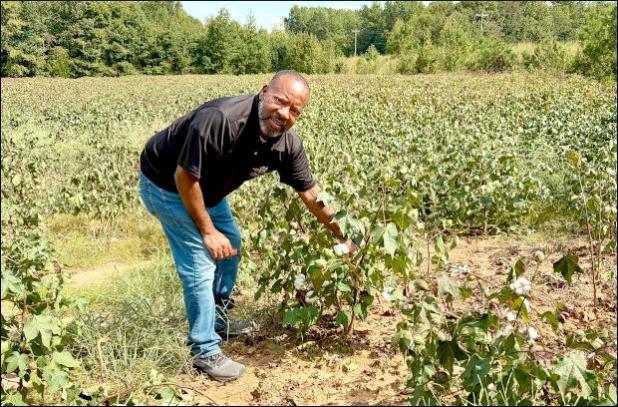
Photo by Bob Bakken/South ReporterArea Extension Agent Lemon Phelps checks the progress of a cotton crop near Holly Springs. Harvest for major crops is already in full swing in Marshall County, if not already completed.
Beating the heat
A punishing late-summer heat wave that pushed September temperatures to record highs across the Mid-South failed to derail Marshall County crops, with local farmers now tracking above-average yields across major staples.
While a prolonged three-month dry spell and a persistent regional “heat dome” created harsh conditions, early spring planting shielded most producers from significant damage, according to Marshall County Area Extension Agent Lemon Phelps.
“When the big part of the drought started, crops were already established,” Phelps said. “They were already doing really, really well. By the time that the drought really would have had a real effect, which was August, you’re getting right around time for harvest, especially for corn.”
Farmers caught an early break when favorable late-winter and early-spring conditions allowed them to enter fields ahead of schedule. Some growers completed corn planting as early as March, well ahead of the usual late-April window, followed by soybeans and cotton. That early headway ensured corn was nearing maturity and soybean pods were setting before the worst of the dry heat settled in. Late-planted soybeans behind winter wheat stood out as the primary crop vulnerable to stress.
Harvest is already in full swing. Phelps reported that area producers have finished 80 percent to 100 percent of the corn harvest. Soybean progress varies widely, ranging from 30 percent completed to 90 percent finished, while cotton remains four to six weeks from harvest.
Though some rain could offer a modest boost to maturing cotton, Phelps noted that producers largely favor dry conditions as combines roll.
“They don’t want anything major,” Phelps said. “A small rain would be fine, but definitely nothing major.”
The season proved more complicated for livestock and forage. Excessively wet weather earlier in the year delayed the initial hay cutting. Although a strong midseason harvest followed, the late-summer drought has eliminated hopes for a standard third cutting.
Cattle have weathered the heat well, aided by shade, ponds, barns, and supplemental feeding where pasture growth slowed. Ranchers are now monitoring cattle markets, where prices have dipped slightly from recent highs but remain well above levels seen two to three years ago.
With harvest activity peaking, Phelps urged motorists to share rural roadways carefully.
“Heavy equipment is going up and down the road,” Phelps said. “Give them room on the road and make sure you’re paying attention. They’re not moving as fast as a normal vehicle would move, so just kind of be on the lookout.”